The Executive Shift: The Unified Theory of AI and Digital Leadership

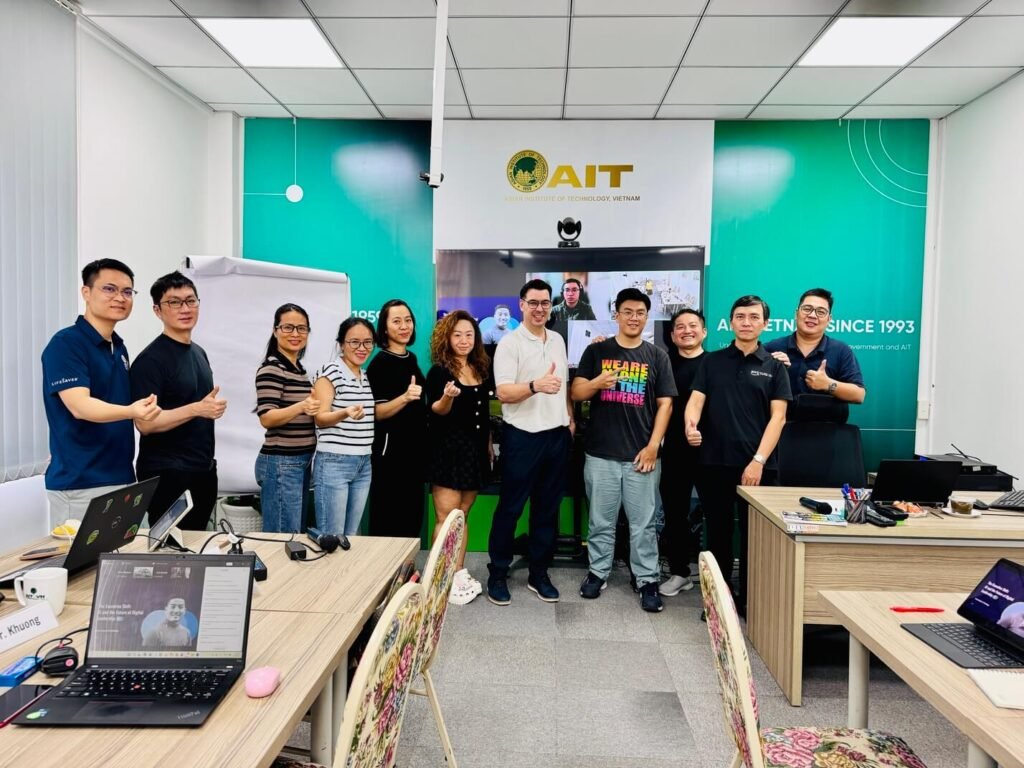
Returning to the Asian Institute of Technology always feels like coming home. As a member of the first batch of PMBADT cohort, I recently had the privilege of stepping back into the classroom—this time as a guest lecturer for Professor Carl Boutet’s digital marketing class. Standing before a diverse group of professionals to discuss “The Executive Shift: AI and the Future of Digital Leadership”, it became clear that the management theories of yesterday are colliding with the digital realities of tomorrow. The energy in the room confirmed that we are all searching for a single framework to explain this turbulence—a “Unified Theory” of modern management and digital leadership.
We have reached a Tipping Point. The era of the manager who simply “does” is coming to an end. We are witnessing the birth of a new paradigm.
The Great Divergence: From Execution to Orchestration
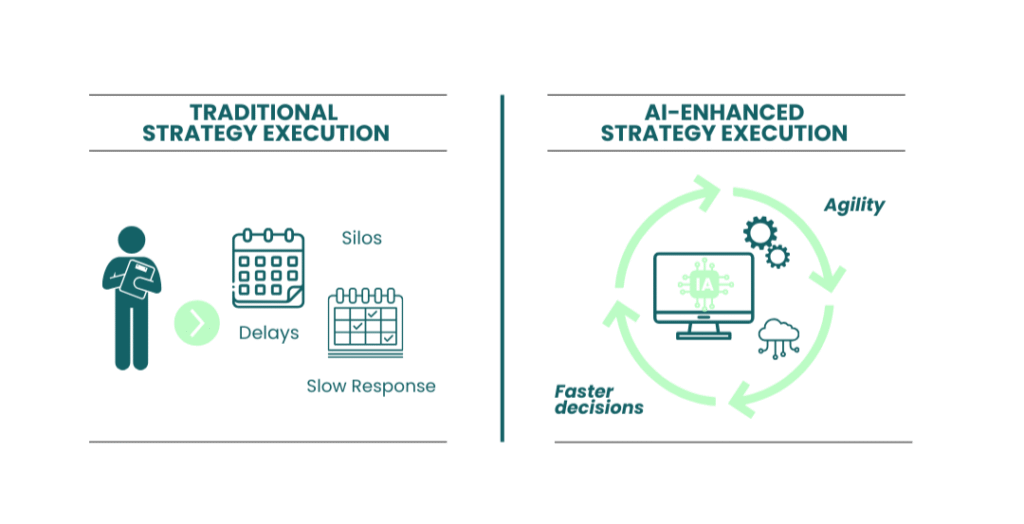
For decades, strategy execution has been a linear, mechanical process—defined by silos, delays, and the leader was the boss pulling the heavy cart alongside their team.
This friction is precisely what I mentioned in The Unified Theory of Existence and Emergence in Management. We have traditionally managed for “Existence”—optimizing the rigid, slow-moving structures of the past. But the AI-enhanced reality is pure “Emergence.” It is circular, agile, and defined by high-velocity decision-making.
Hence, the “Executive Shift” is the realization that we can no longer apply “Existence” tools to an “Emergence” world. And the AI-enhanced reality is different. It is circular, agile, and defined by faster decisions. The focus shifts profoundly from “doing” to “directing” and “designing”.
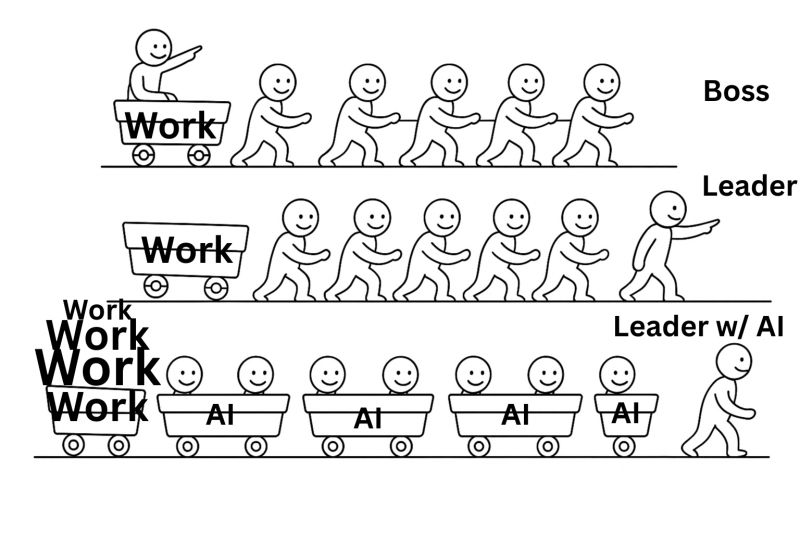
In this new model, AI takes the wheel on execution. It absorbs the high-volume, repetitive tasks—ad bidding, content drafting, and personalization at scale. The leader is no longer just pulling the cart; they are designing the engine. The old fear of “firing executives” is misplaced; the reality is that we are replacing rote work with strategic command centers.
The New Divide: Strategy vs. Execution
This shift creates a clear demarcation in the corporate anatomy, a New Divide.
On one side, we have Execution, now automated by AI. This domain is characterized by high speed, high volume, and low error. It handles content creation, real-time bidding, and basic customer service.

On the other side remains Strategy, the exclusively human domain. This is where the true value of leadership now retreats and fortifies. It is built on:
- Vision and Empathy
- Ethics and Curiosity
- Systems Thinking and Judgment
The Managerial Mandate: The 4 Strategic “E”s
To navigate this divide, the modern digital manager must elevate their role from Tactician to Orchestrator. This requires mastering the 4 Strategic “E”s:
- Ecosystem Design: You are no longer just managing people; you are architecting the entire AI-powered MarTech stack and data pipelines.
- Ethical Governance: As AI executes, you must set the guardrails. This means managing bias, ensuring transparency, and protecting data privacy.
- Empathy & Insight: AI can generate data, but it cannot generate meaning. Your job is to translate AI insights into genuinely resonant human stories.
- Experimentation: The new leader designs complex tests and “learning loops” to continuously train and optimize the models.
The Human Core: The Iceberg of Consciousness
Perhaps the most profound realization in this shift is that while AI can replicate the doing, it cannot replicate the being.
We can view the leader’s mind as an iceberg. The Conscious Mind holds our logical thinking and willpower—skills that AI is beginning to encroach upon. But below the waterline lies the Unconscious Mind. This is the reservoir of our beliefs, intuition, imagination, and even our protective reactions.
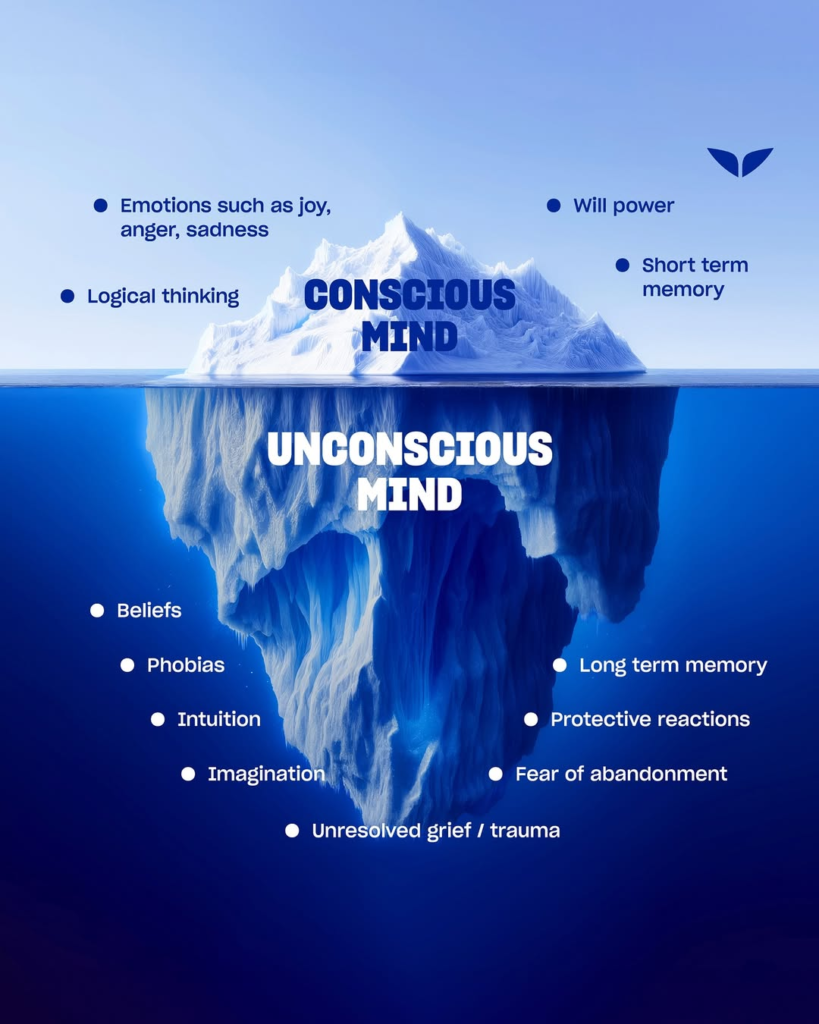
It is here, in the deep waters of Human Insight and Strategic Courage, that our true value lies. AI does not have long-term memory in the emotional sense; it does not process unresolved grief or joy. It processes data. We process life.
Conclusion: Challenge as Opportunity
The threat is real for those who refuse to adapt: managers who only monitor AI outputs risk redundancy.
But the opportunity is far greater. We are invited to become something new. We can be the Cyborg (collaborating with AI), the Innovator (pioneering methods), or the Artisan (crafting the high-quality, non-replicable work).
To succeed, you must build the “Al-Fluent” mindset. Master prompt engineering and data literacy, yes, but more importantly, master the governance of the machine and the execution of the human spirit.
This is your mandate. Stop doing. Start designing.
Smile. 😉