
The Unified Theory of Existence and Emergence in Management

In physics, scientists spend lifetimes searching for the “Unified Field Theory”—a single framework to explain all forces in the universe. In management, we are searching for something similar. Why do some giants collapse in the face of change, while others innovate relentlessly?
The answer lies in the relationship between the two “fundamental particles” of any organization: Existence (H) and Emergence (T).
Existence (H – The “Now” or “Hierarchy”): Order, optimization, and the exploitation of what currently works.
Emergence (T – The “Next” or “Transformation): Chaos, experimentation, and the exploration of what is becoming..
The history of organizational evolution is essentially the journey of transforming the relationship between these two forces: from suppression to separation, integration, and finally, fusion. Here are the 5 stages of this evolution.
Stage 1: The Domination of “Existence” (H >> T)
State: The Traditional Machine
In this nascent stage, the organization is designed as a perfect mechanical apparatus. “Existence” (H) is King. Every process is optimized to repeat past successes. Any sign of “Emergence” (T)—a strange idea, a deviation from the norm—is treated by the corporate immune system as an “error” and is immediately eliminated.
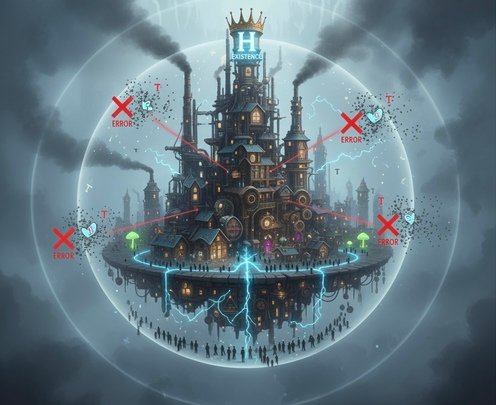
- Relationship: H suppresses T.
- Characteristic: Stable but Brittle.
- E.g., Kodak. Kodak actually invented the digital camera (a form of T) in 1975. However, their massive film business machine (H) viewed this invention as a threat to current margins. H suppressed T, burying the digital revolution to protect film profits, leading to their eventual collapse when the market shifted.
Stage 2: Strategic Separation (H || T)
State: The Ambidextrous Organization
Leaders realize that without innovation, they will die, but the “Existence” machine is too rigid to change from within. The solution is to split the organization: One side continues to make money (H), while the other is funded to dream and disrupt (T). They build “Skunkworks” or “Innovation Labs” protected by firewalls from short-term financial KPIs.
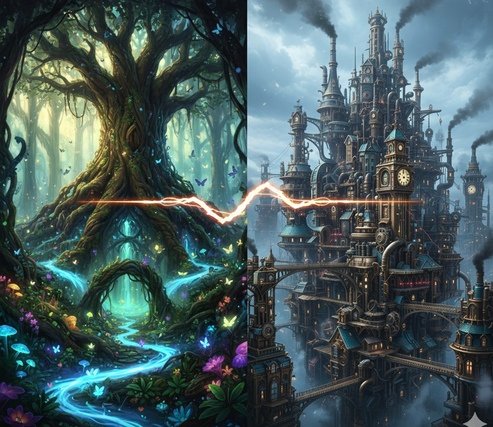
- Relationship: H and T exist in parallel but separate silos.
- Characteristic: Innovative, but Siloed.
- E.g., Google X (The Moonshot Factory). Alphabet created X completely separate from the Google Search core business. At X, projects like Waymo (self-driving cars) or smart contact lenses (T) are developed in a dedicated environment, shielded from the efficiency pressures of the ad business (H).
Stage 3: Local Integration (H ↔ T)
State: The Adaptive/Agile Organization
Separation is good, but too slow. In the digital age, you cannot wait 6 months for R&D to hand over an initiative. Organizations break big structures into small squads. Each squad must shoulder both burdens: maintaining the product (H) and experimenting with new features (T) within the same Sprint cycle.

- Relationship: H and T integrated at the cellular level.
- Characteristic: Flexible and Responsive.
- E.g., Spotify. The famous “Spotify Model” allows a small squad of engineers full autonomy over their feature. They must ensure the code is stable (H) while continuously A/B testing for improvements (T) every week, without needing top-down approval.
Stage 4: External Diffusion (H-Platform / T-Ecosystem)
State: The Open Platform
This is a quantum leap in mindset. The organization realizes its internal resources are finite. They decide to externalize both forces. They turn their “Existence” capability into a robust infrastructure (Platform) and invite the outside world to drive “Emergence.”
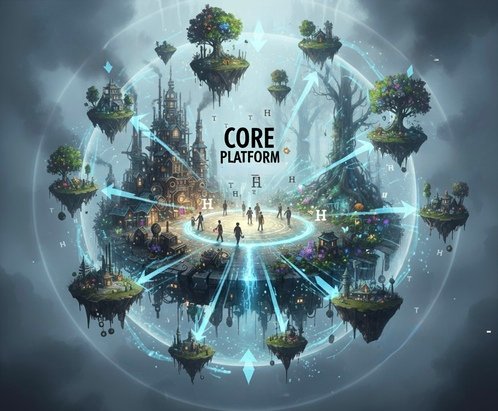
- Relationship: H becomes the foundation (internal) for T to bloom (external).
- Characteristic: Leveraged and Scalable.
- E.g., Apple App Store. Apple focuses immense resources on building a stable, secure iOS and App Store (H). They then open the gates for millions of global developers to create apps (T). Apple didn’t need to invent Uber or TikTok; they just provided the good soil (H) for those ideas to emerge (T).
Stage 5: Purpose-Driven Fusion (H ≡ T)
State: The Self-Organizing (Teal) Entity
The highest stage of evolution. Here, the distinction between “operator” and “innovator” dissolves. The organizational structure (H) is not fixed but fluid, continuously morphing based on real-time needs (T). Every employee is a sensor, empowered to propose structural changes if it serves the common purpose.
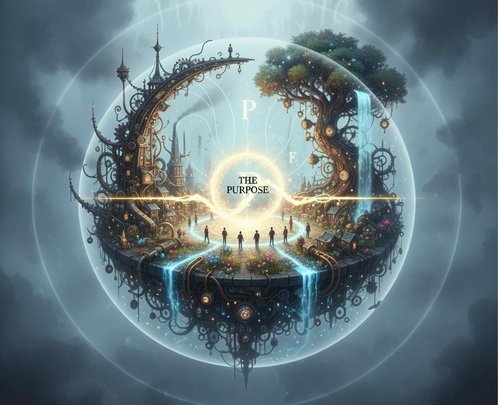
- Relationship: H and T fuse. Emergence is the process to change Existence.
- Characteristic: Self-evolving and Purpose-driven.
- E.g., Buurtzorg. This Dutch healthcare organization has 14,000 nurses but… no managers. Nurses organize into self-managed teams (H). When they detect a new patient need, they adjust their working methods (T) instantly without bureaucracy. The structure breathes and changes like a living organism.
Conclusion
Evolution is not a straight line, and not every company needs to reach Stage 5 immediately. However, understanding this “Unified Field Theory” helps leaders realize one truth: The tension between stability and innovation is not a bug; it is a feature.
Instead of trying to suppress the chaos of Emergence or break the order of Existence, our job is to design an architecture where these two forces can dance together.
Where is your organization in this dance?
